
Hotel booking engine Rooms, packages and extras in one checkout.
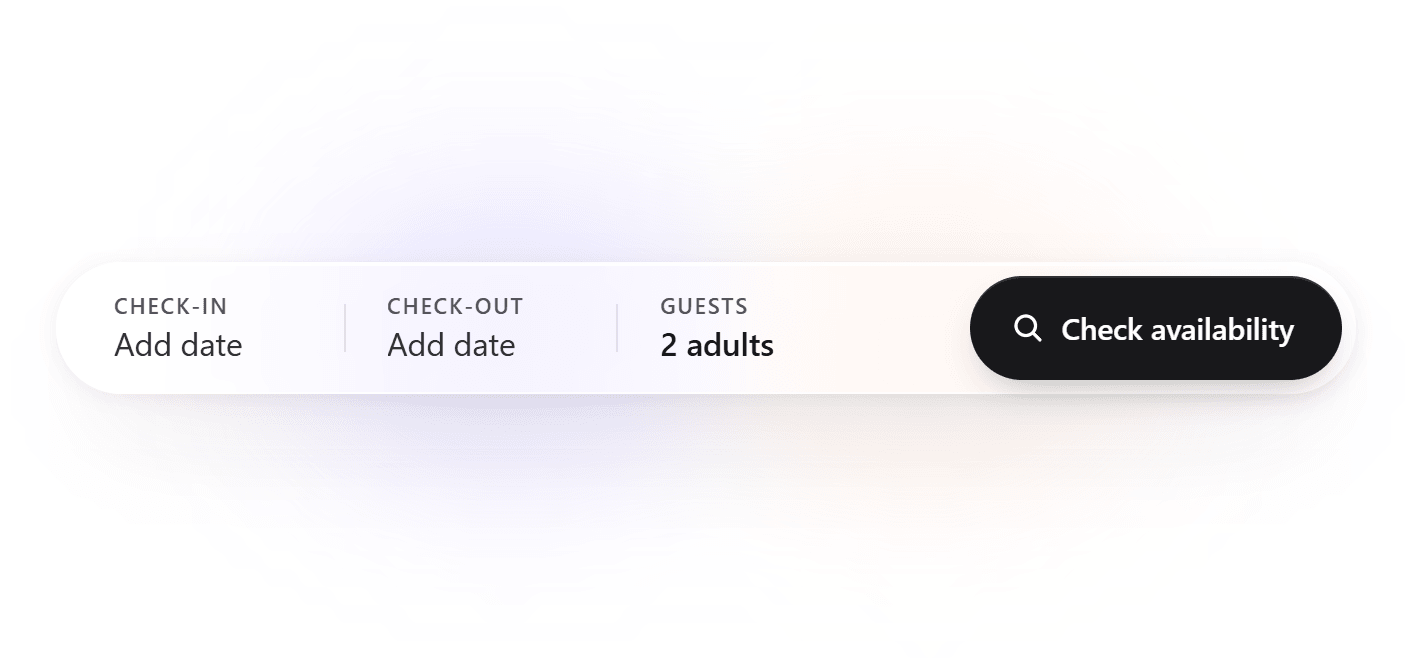
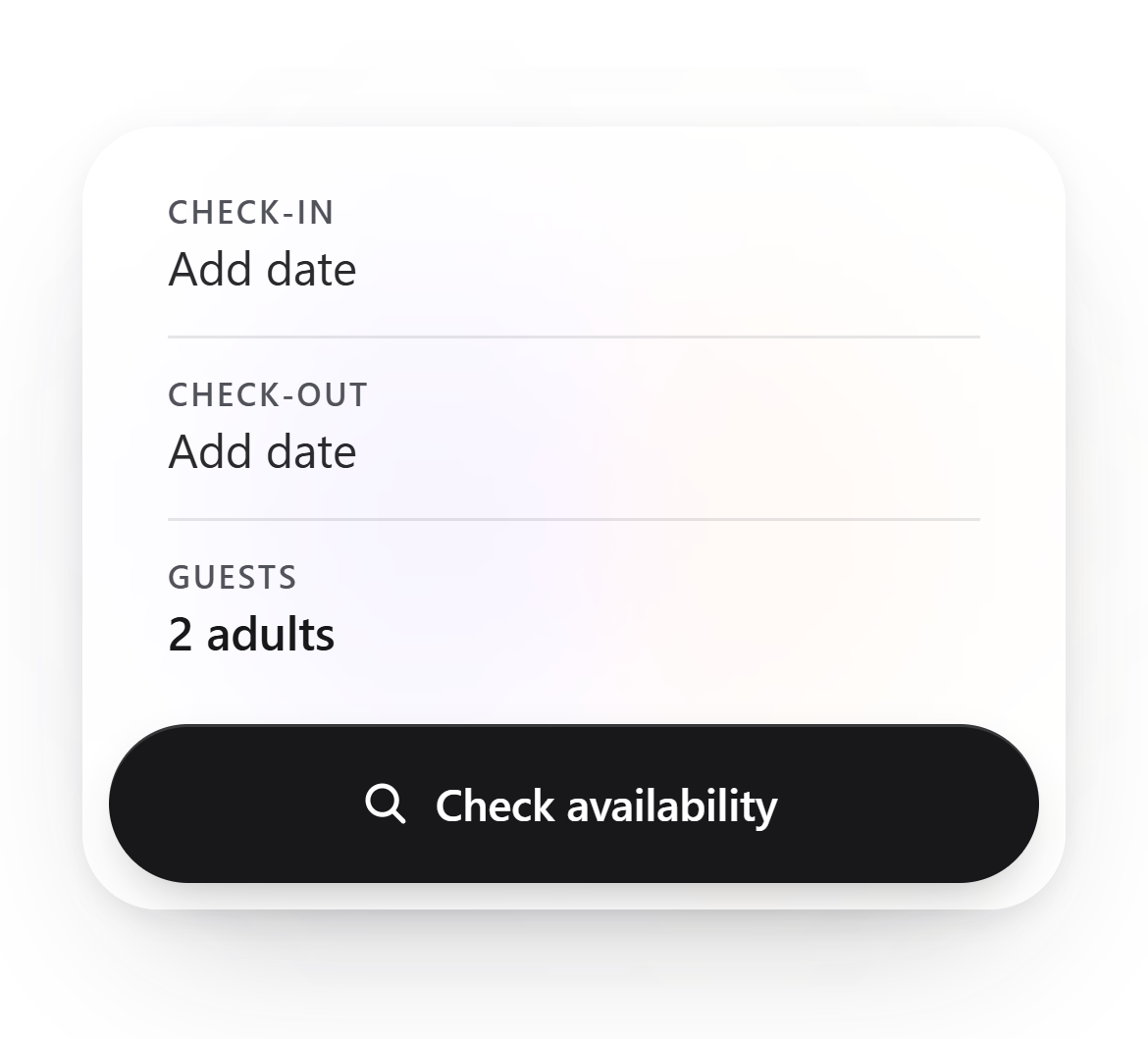
Bookings happen on your hotel's own domain, and on a phone the checkout opens full screen. Guests see the exact total before they pay, so there are no surprises at reception.
Holiday packages in the same checkout
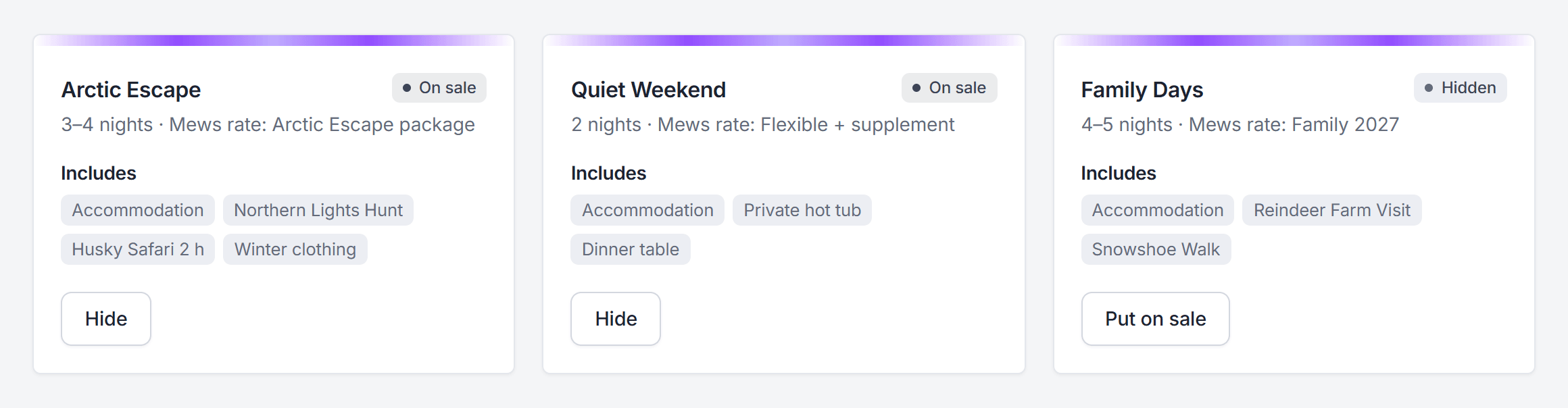
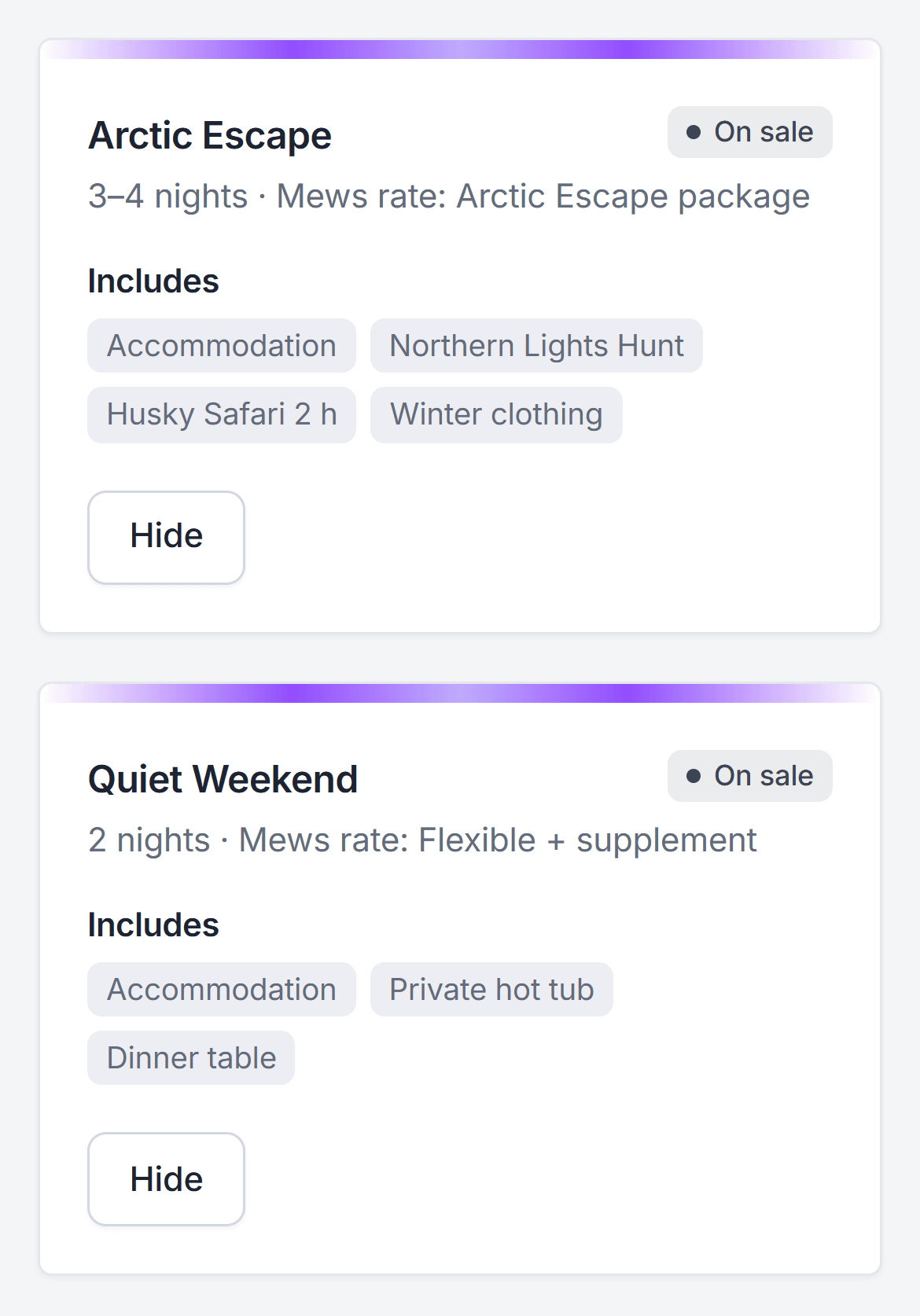
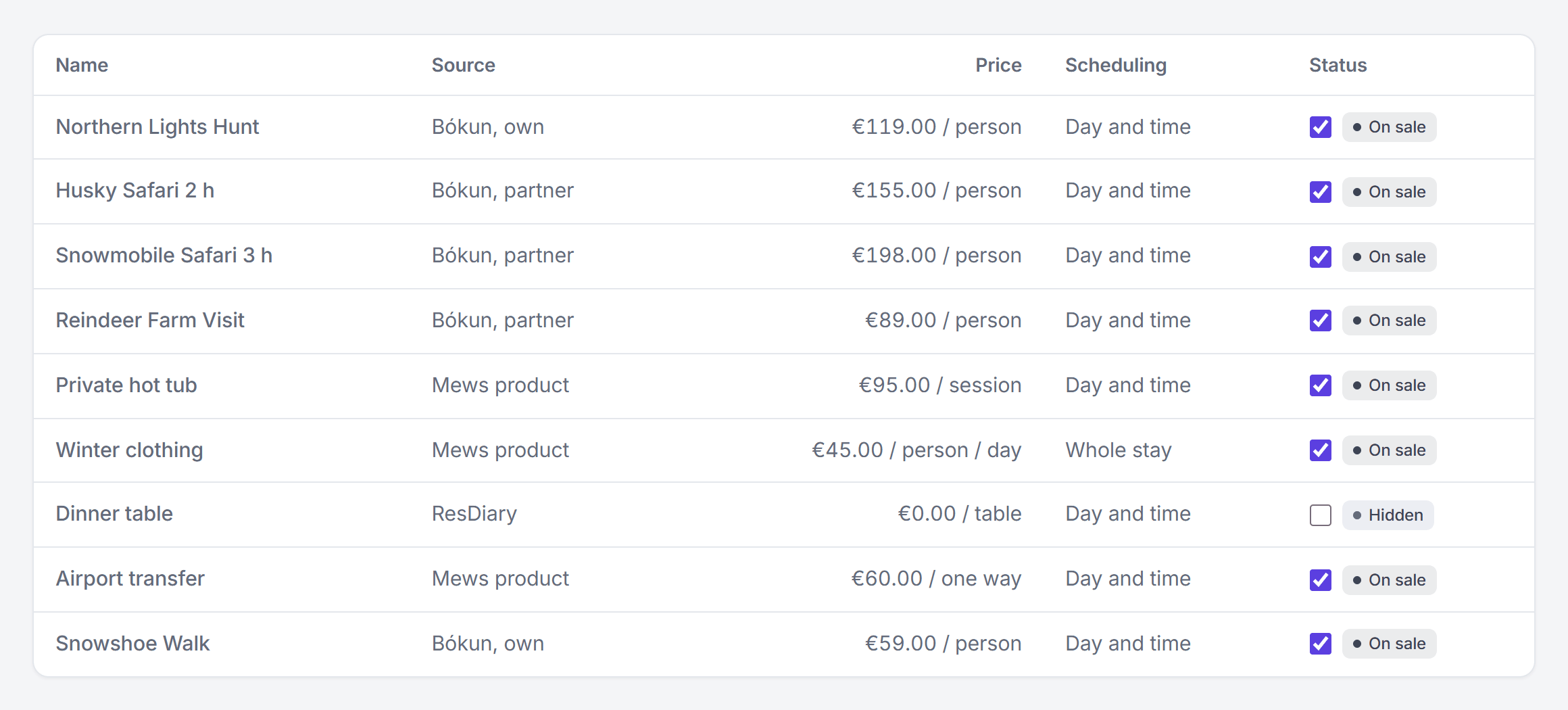
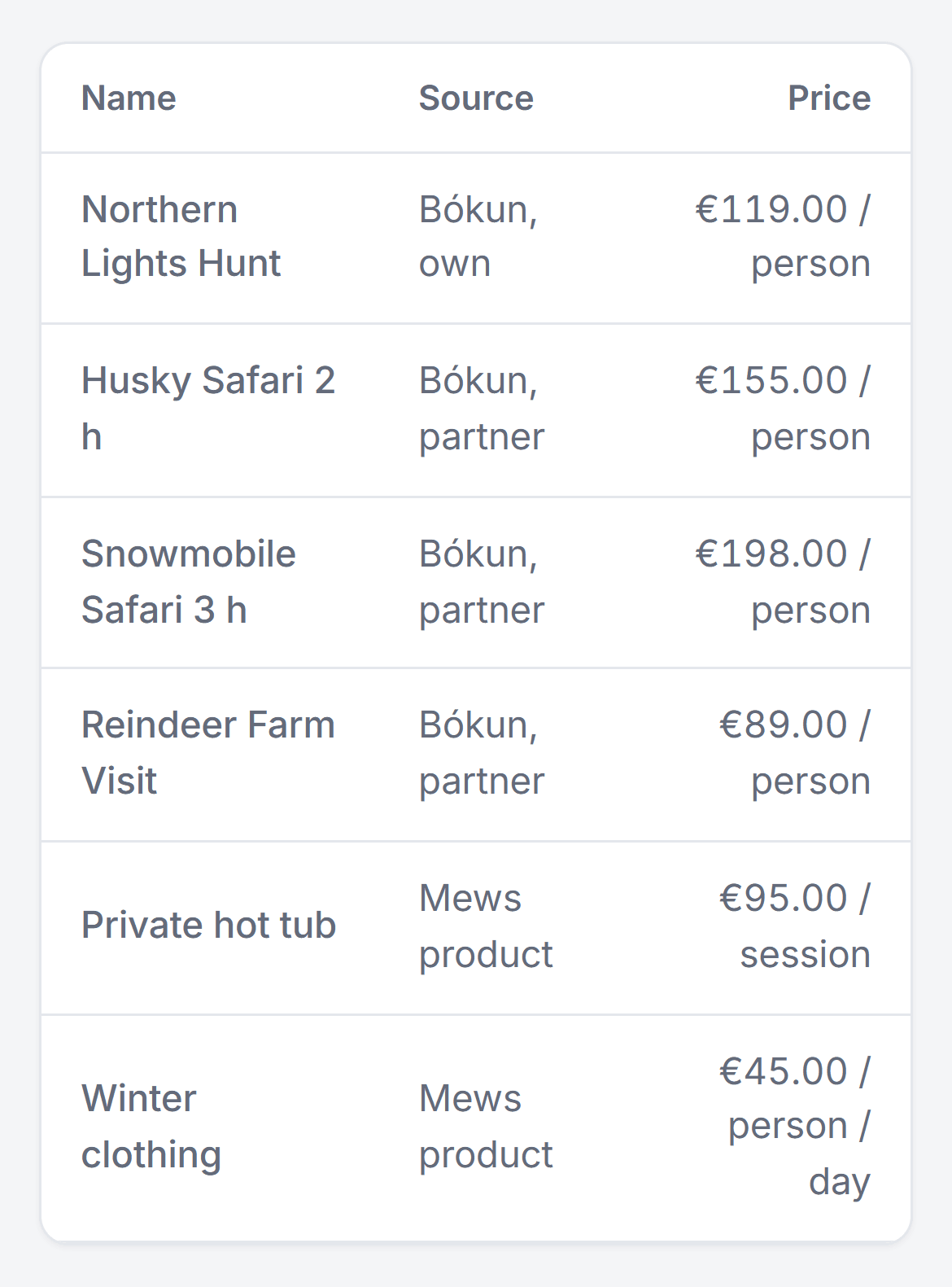
Build a package from accommodation, Mews extras and activities. The price comes from the Mews rate rule, and you can put the package on sale or hide it with one click.
- Mews products and activities in one package
- The Mews price for each package
- On sale or hidden from the dashboard
Extras that fit the dates of the stay
Guests see the extras and activities that fit their stay. Each has an exact price, so the total is right in the checkout and holds no surprises at reception.
- Mews products and activities in one list
- Priced per person, per time, per night or per direction
- Scheduled for a day and time, or for the whole stay
Bookings on your own domain
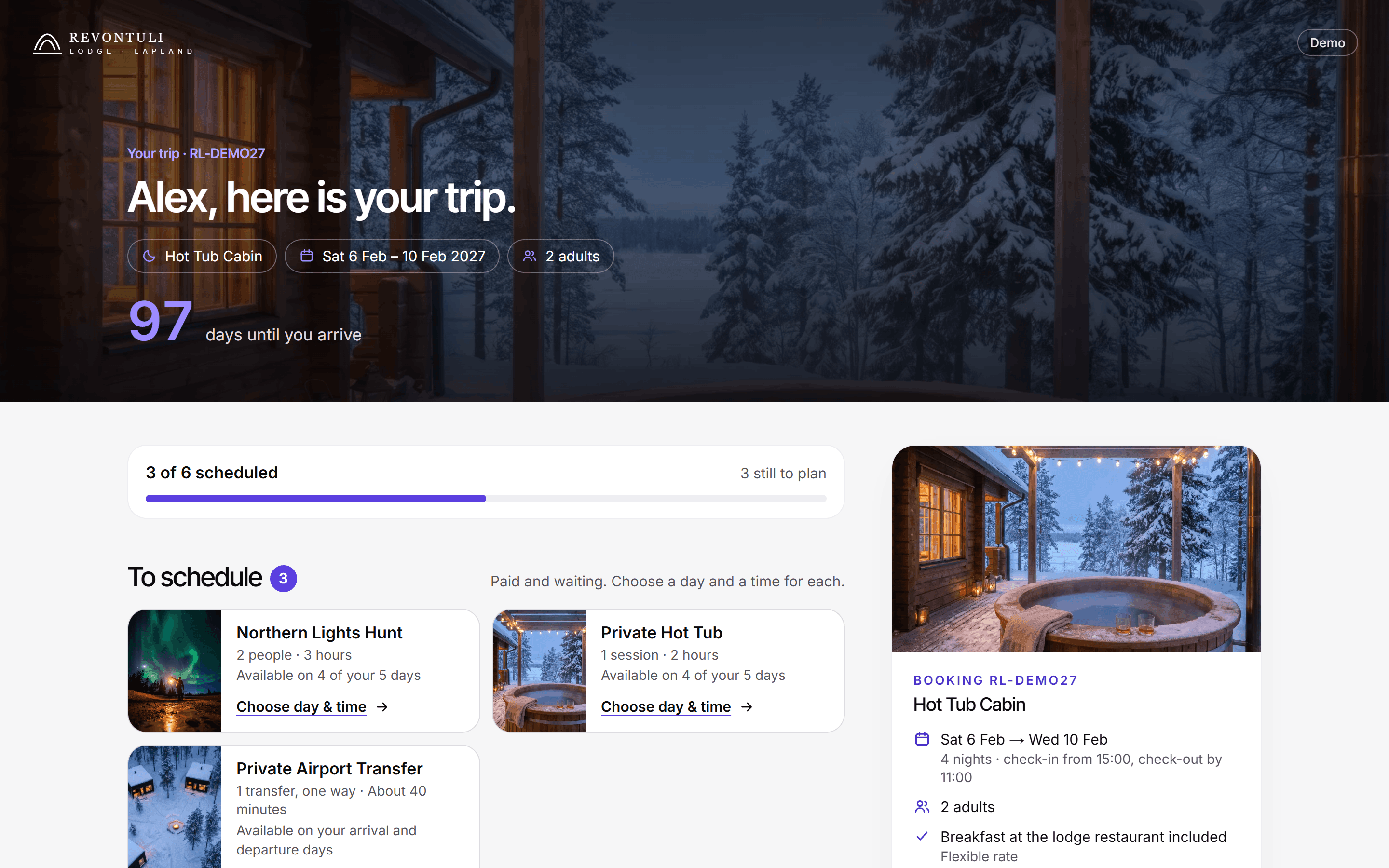
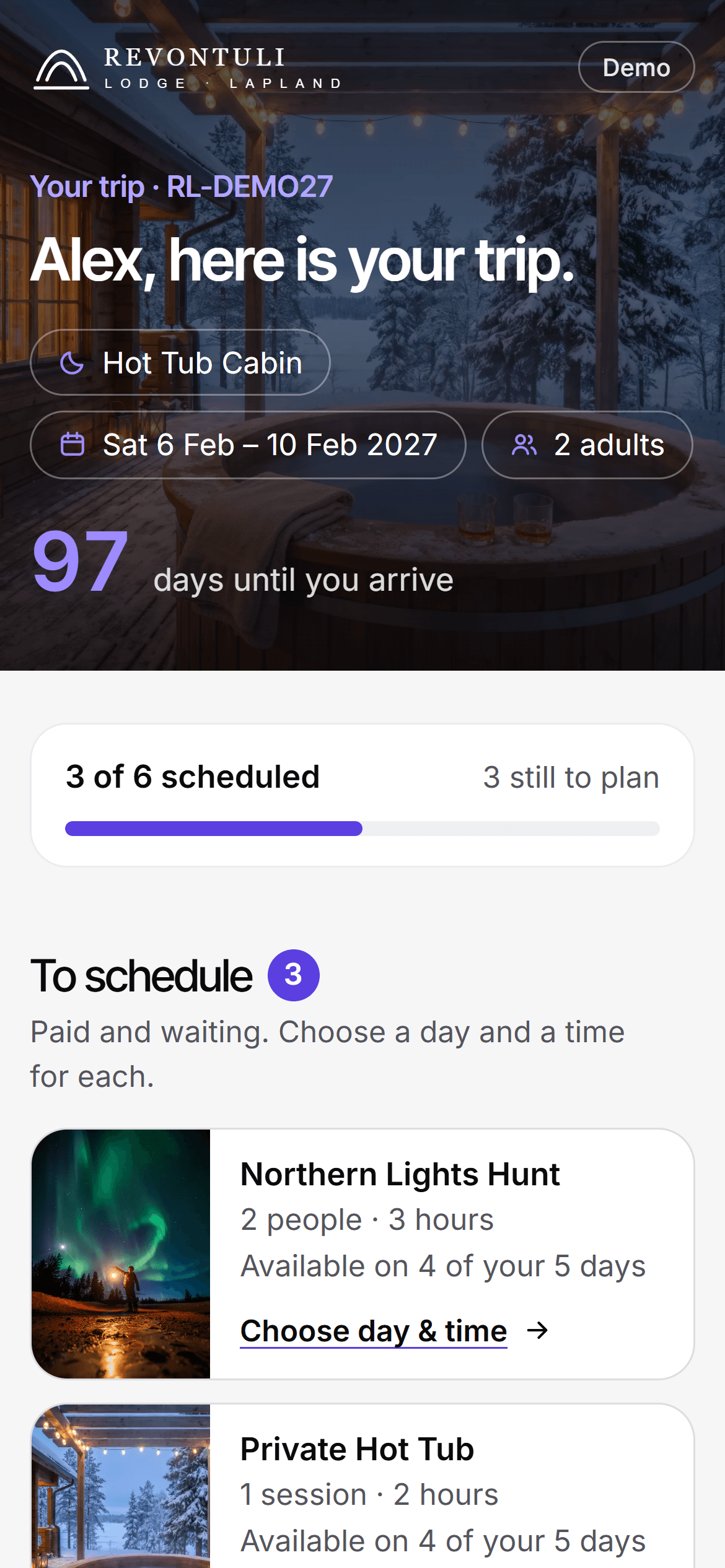
The checkout and trip portal open on your hotel's own address, for example book.yourhotel.com. Guests stay under your hotel's name from start to finish.
- Your own booking address on your hotel's domain
- The search bar is copied to your website once
- On a phone the checkout opens full screen
Also ready to go
Prices straight from Mews
The checkout shows the same price and availability as Mews, with no manual updates.
Mews Payments
The guest pays for the whole trip at once, and the payment shows in Mews.
Everything on the Mews bill
Room, package, extras and activities go on the same bill.
Partner activities
Sell tour operators' activities alongside your own. FareHarbor: integration available on request.
Bookings in your analytics
Every booking is recorded in your website's Google Analytics, Google Tag Manager and Meta Pixel.
Restaurant bookings
Restaurant table bookings join the same order, from the property's own table booking system.
Reminders for unfinished bookings
At checkout, guests can ask for an email with a link to finish their booking later. Reminders go only to guests who ask, two emails at most, and each one has a link that stops them.
See the example emails